
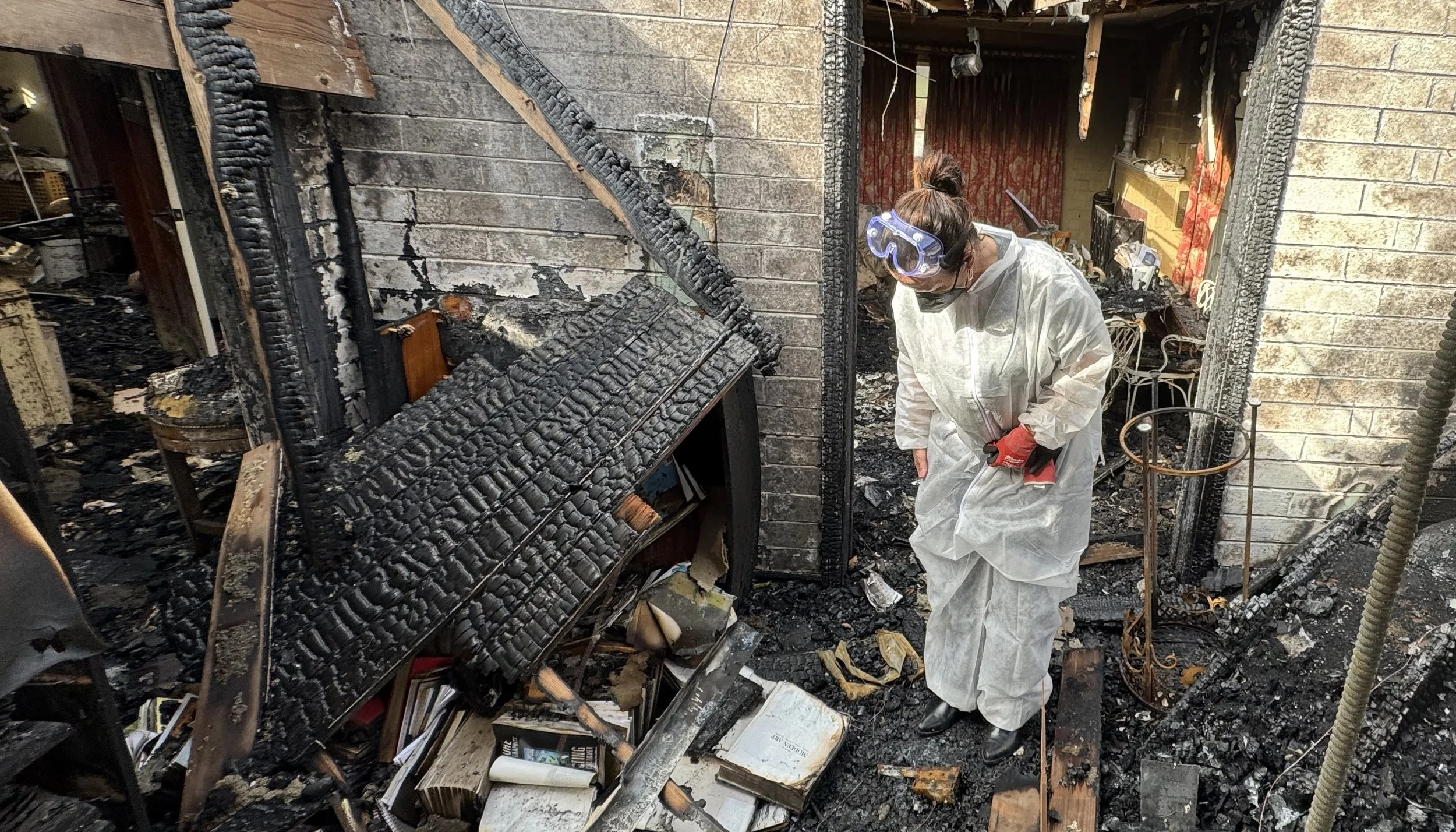
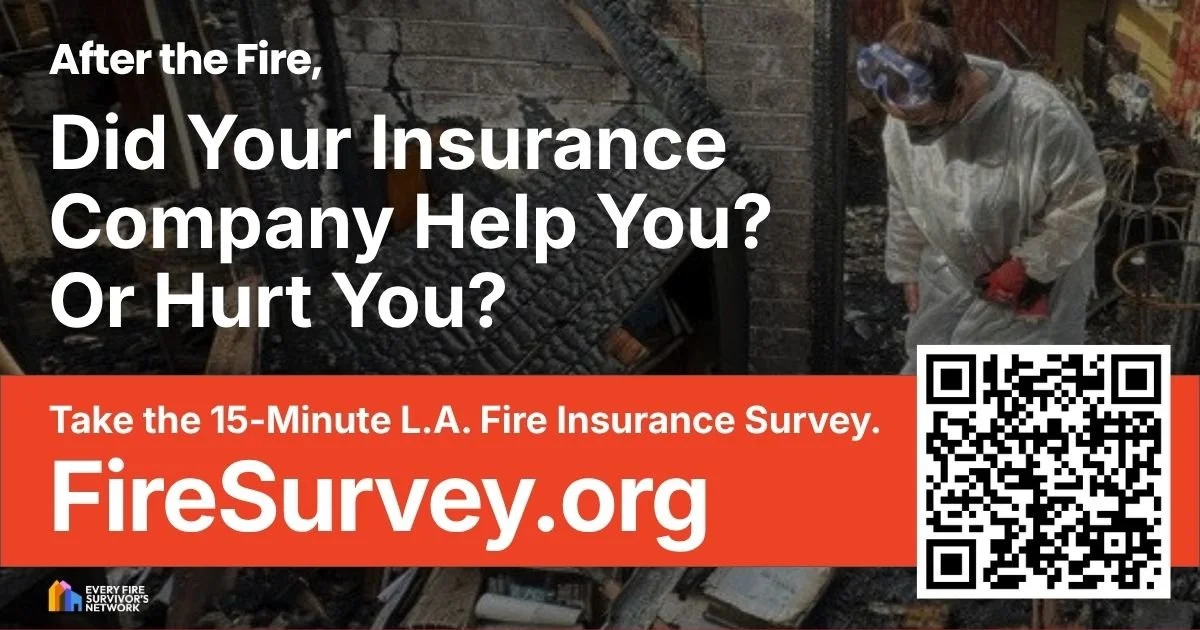
After the Fire,
Did Your Insurance Company Help You?
Or Hurt You?
Insurance companies spend billions selling us a promise: “If disaster strikes, we’ll be there.”
Now, L.A. fire survivors are building the nation’s first public record of which companies kept that promise. And which didn’t.
Take the survey. Build the evidence. Get survivors home.
Approximately 15 minutes. One response per household. The survey will close once we have the responses required for the study.
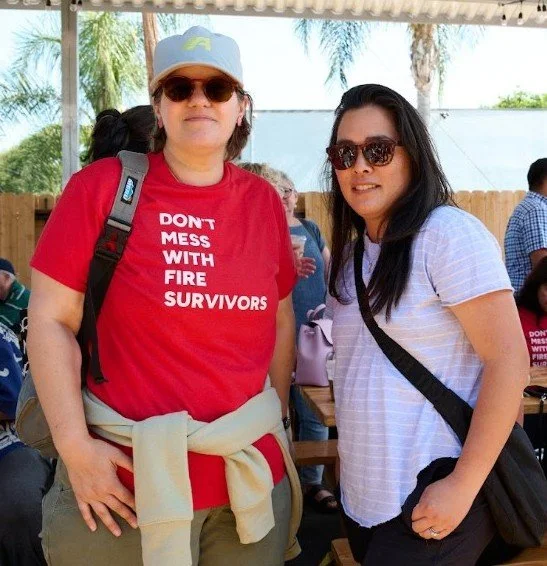
The Data Can Show Where Billions Owed to Survivors Are Getting Stuck.
Recovery follows the money. And the biggest source of recovery money is supposed to be insurance.
Yet survivors across Los Angeles are still fighting for money we need to rebuild and recover.
Until now, there’s been no public data showing how each insurance company is performing after the Eaton and Palisades fires.
Together, we can create it.
Did some insurers systematically leave their customers underinsured?
How is each insurer handling smoke-damage claims?
Did some insurers nonrenew customers before the fires, leaving them on the FAIR Plan?
Which insurers show patterns of delays, underpayments or denials that warrant investigation?
And which insurers paid what they owed and helped their customers recover?
Your experience can help reveal whether what happened to you is part of a larger pattern.
Those patterns can become evidence for investigations, enforcement, litigation, journalism and insurance reform.
And that evidence can help get the insurance dollars survivors are owed moving so families can get home.

Thousands of Survivors.
One Public Record.
Every Fire Survivor’s Network is working with a UCLA research team to turn thousands of survivor experiences into rigorous public data.
The results will be made public so survivors, journalists, researchers, regulators, law enforcement, lawmakers and community organizations can see how each insurance company performed.
The project will create three free public resources:
Open public data to uncover patterns and compare insurers.
Interactive data tools to explore questions like underinsurance, smoke damage, delays, denials and the FAIR Plan insurer by insurer.
A public insurer performance report showing, where the data supports meaningful comparisons, which companies failed their customers and which delivered.
For the first time, survivors will be able to see whether what happened to us also happened to thousands of others. And the people with the power to act will be able to see it too.
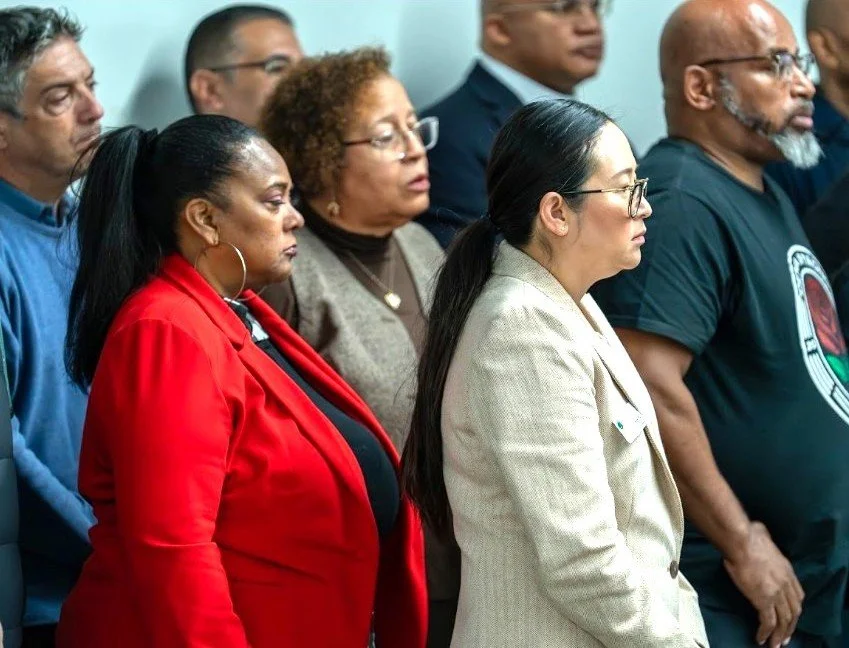
This Survey Is For Every Survivor
Homeowners. Renters. FAIR Plan policyholders. Condo and HOA residents. Mobile home residents. Survivors with destroyed homes. Survivors dealing with smoke damage. Survivors who discovered they were underinsured. Survivors who had no insurance when the fires happened.
If you were affected by the Eaton or Palisades Fire, this survey is for you.
The survey takes approximately 15 minutes. You do not need every document in front of you. Your best estimate is enough.
Please submit one response per household, ideally from the person who has handled most interactions with your insurer.

Your Privacy Will Be Protected
No individual or household will be identified in any public report or dataset.
Your answers will be de-identified and combined with those of other survivors. Additional protections will be used where combinations of information could risk identifying a household.
Your identity stays private. The patterns become public.
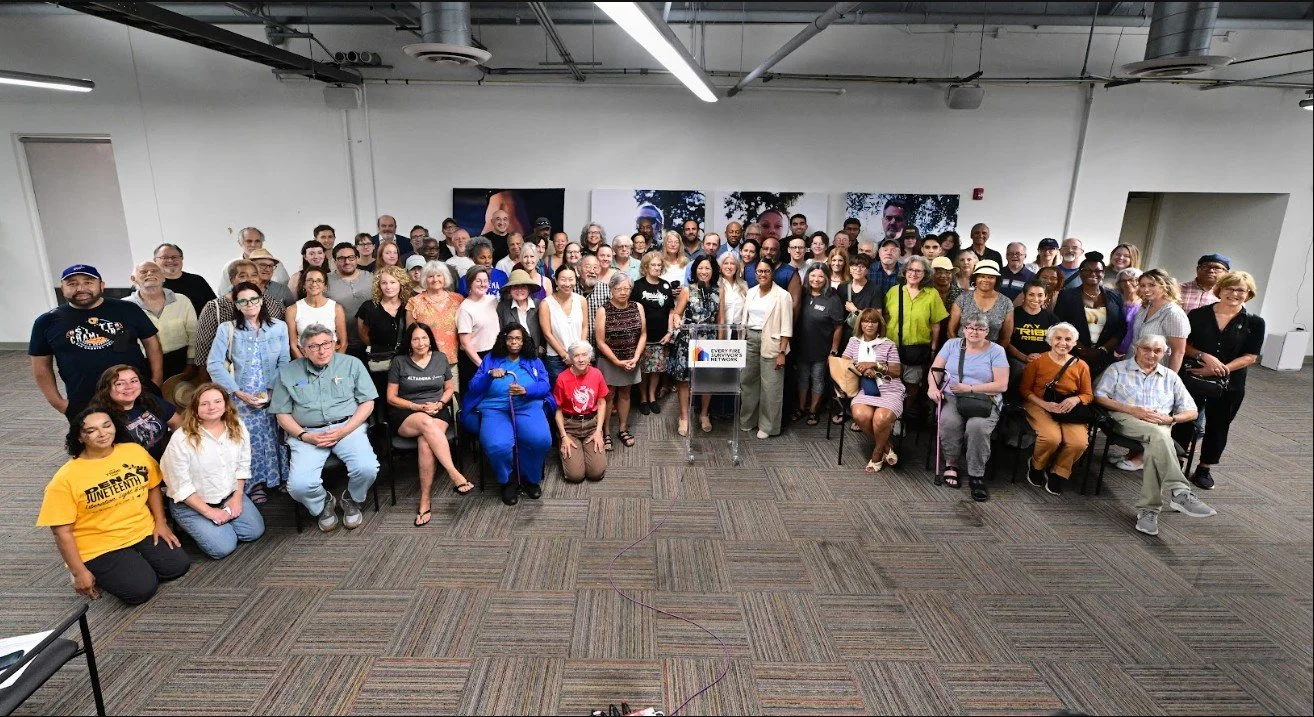
Make Sure Your Experience Is Counted
The survey will close once we have the responses required for the study.
If you want your experience represented when your insurer’s performance is measured, take the survey now.
Help Another Survivor Be Counted
Know someone who is underinsured? Fighting over smoke damage? Still waiting for insurance money? On the FAIR Plan? Or whose insurer came through for them?
Send them the survey: FireSurvey.org
Want to invite more survivors before the survey closes? We’ve made it easy with ready-to-share text, email copy, social images and Joy Chen’s Instagram reel.
Take the survey. Build the evidence. Get survivors home.