
Survivor voices are moving recovery forward
Jan 30, 2026
Dear friends,
After all we’ve been through together over the past year, this week was supposed to be quieter for me.
The first quieter week since the fire.
I even made a Tuesday morning appointment to go to the bank.
But just before I walked out the door, I peeked at my email.
Six or seven messages from reporters. All urgent. Tight deadlines. Requests for comment and requests for survivor voices. All tied to a new Trump executive order.
Trump had announced a federal takeover of our local permitting process.
I canceled the bank appointment.
What happened next is a case study in how recovery actually moves. Through connection. Through coordination. Through survivors and allies pulling together. And through the essential role that YOU can play in making that possible.
Connecting and coordinating with allies
Before I could speak to the media, I needed to figure out what the Trump executive order actually meant and to develop EFSN’s position.
I texted Supervisor Kathryn Barger and her team. She and I quickly reached the same conclusion:
The biggest barrier in this recovery right now is not permits.
It’s money.
And we need President Trump to release the federal disaster relief we’re due.
That was a start. But I knew nothing about the federal disaster relief process and how it’s been held up.
So I texted the crack team at the Department of Angels. Sarah, Christine, Angela, and Andrew jumped in, sending talking points that grounded me quickly.
I also texted Lily Bui at SoCal Grantmakers, who’d just written a blog post on federal disaster relief. She sent me added context and framing.
I pulled all that together and began calling reporters back.
At the same time, something else was happening.
Survivors answering the call, together
EFSN Communications Director Sandra Stanisa was dialing survivors.
Because the media did not just want statements from me.
They wanted survivors.
On camera.
In Altadena.
Within one hour.
Phones rang.
Texts flew.
Calendars were cleared.
Survivors were busy. And still, they jumped in.
Other survivor leaders who had been contacted by the media reached out for talking points. I shared what I had so we could stay aligned.
By the end of the day, television, print, and online coverage featured survivor voices with different lived experiences and one shared message.
We’d turned a chaotic national headline into a call for urgent federal disaster relief.
One example was this ABC News segment featuring Governor Newsom, Mayor Bass, me, and two survivors we assembled quickly for the crew, Nic Arnzen and Sylvie Andrews.
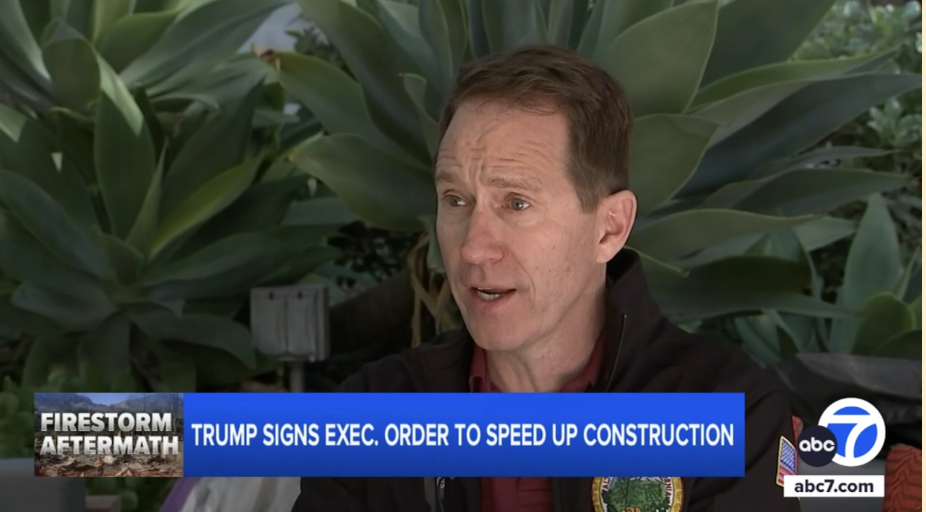
If you watch it, you’ll see what I mean. Nic and Sylvie spoke from lived experience with clarity and confidence.
This is what civic leadership looks like when it grows directly out of survival.
That is the EFSN Survivor Media Corps in action.
And that was just one day.
How our communications work began, and why it changes outcomes
This level of coordination didn’t happen overnight.
It began with insurance.
Early on, through our Discord, survivors started comparing notes. The same delays. The same lowball estimates. The same adjusters cycling in and out.
We realized something critical.
To keep up delays and underpayments, insurers depend on survivors being isolated and exhausted.
By connecting survivors, building a shared recovery hub, making it easy for journalists to reach real people, and supporting survivors to speak with clarity and confidence, we changed that dynamic.
Survivor voices became a form of civic leadership.
Patterns became visible.
Accountability became possible.
Andrew Gumbel’s recent reporting in The Guardian traces this shift. What once looked like isolated disputes became evidence of systemic conduct.
That shift, from private complaints to public accountability, is how money begins to move.
In Year One, survivor coordination helped unlock more than $100 million in insurance payouts directly into survivor accounts.
From sad and lonely press conferences, to this
As a former Deputy Mayor of Los Angeles, I have been to plenty of sad, lonely press conferences. The kind where the only camera in the room belongs to CityView Channel 35, faithfully recording even when no one else shows up.
That is not EFSN.
This is:
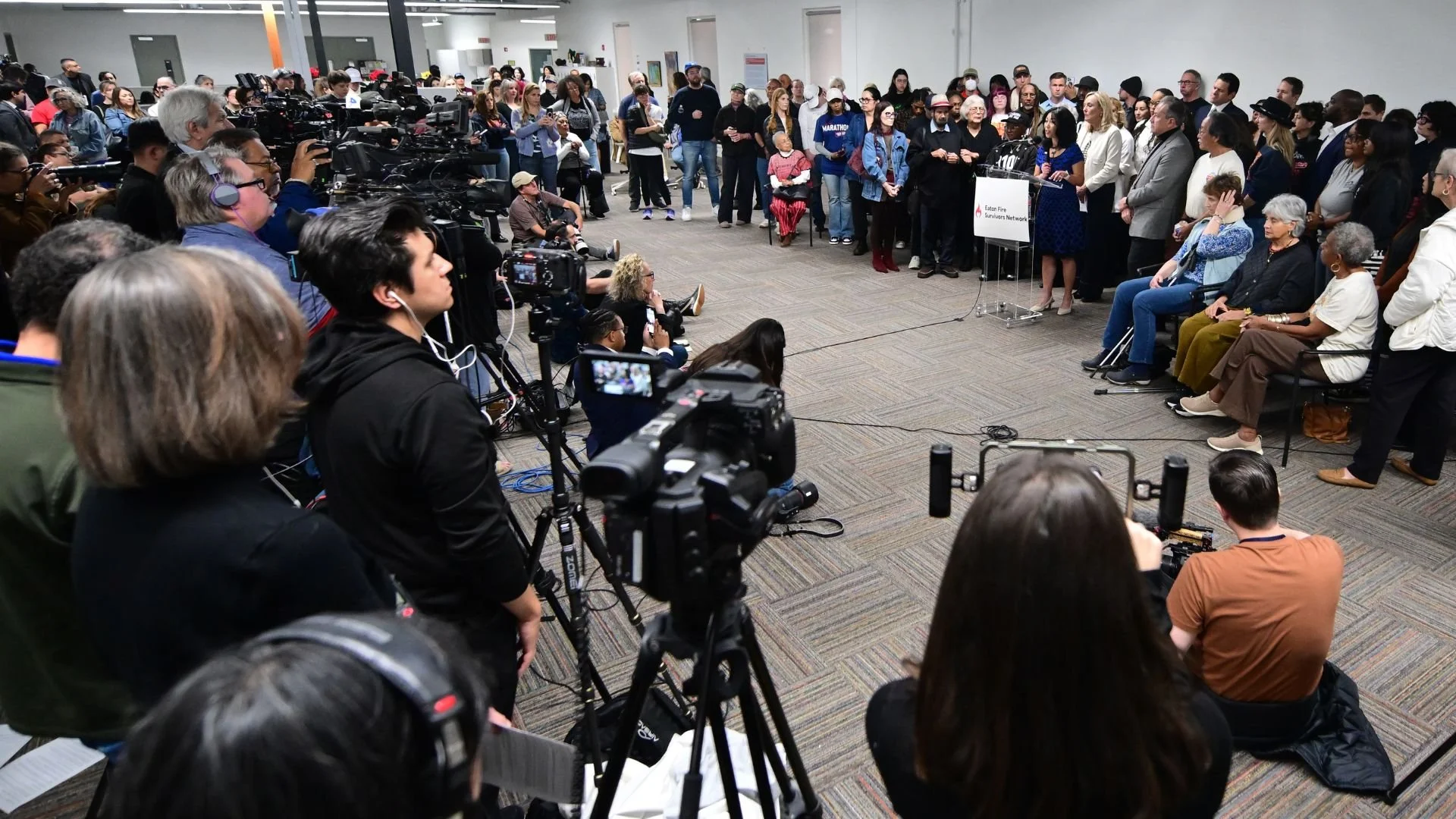
People often are shocked at the amount of news media we get.
That attention did not happen by accident, and the media are not a monolith.
Day in and day out over the past year, we have built relationships of trust with reporters and producers across local and national outlets.
They know we will be honest.
They know we will bring real people and compelling stories.
They know we back up all our work in deep data and analysis.
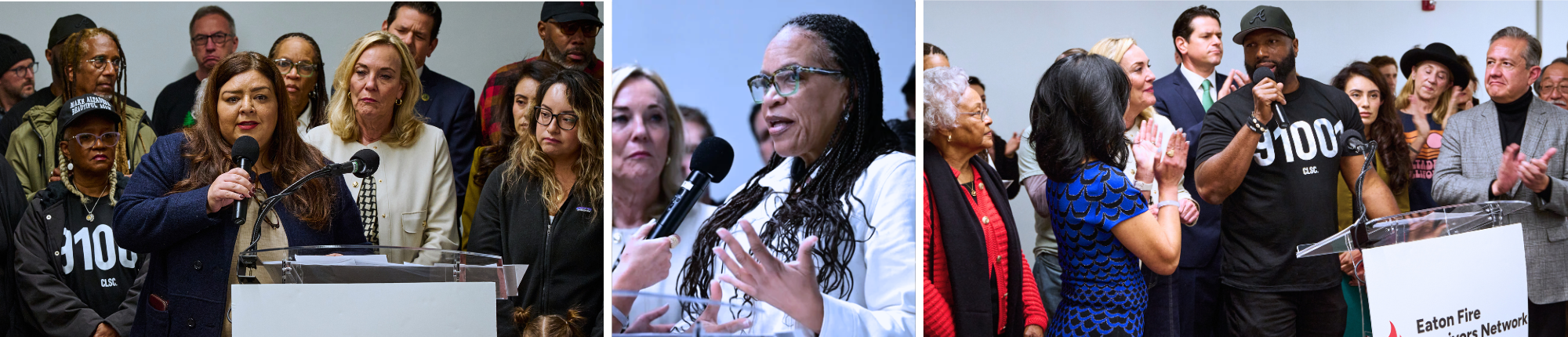
Our one-year anniversary survivor-led press conference was described by people in the room as chilling, heart-wrenching, and deeply affirming.
If you want to see EFSN in action, I invite you to watch it.
Watch and share the one-year press conference here:
https://www.efsurvivors.net/one-year-press-conference
This is what survivor voices look like when we are connected to one another, connected to allies, and connected to journalists who care.
These connections are what allow us to shape public understanding and influence what comes next in our recovery.
We are not waiting for help to arrive.
We are shaping what comes next.
Why connection and communication matter even more in Year Two
The world is full of disasters. The news cycle is crowded and relentless. Attention shifts quickly.
When attention shifts away from the Los Angeles fires, recovery does not quietly continue.
Insurers stall.
Policy momentum fades.
Temporary displacement hardens into long-term instability and, for some families, homelessness.
So when sudden news breaks around our recovery, there is a narrow window.
Either survivor voices shape what the public understands.
Or the moment passes, and nothing moves.
The Survivor Media Corps. Please join us.
This is why the Survivor Media Corps exists.
If you are a survivor, I would truly love for you to join us.
The Survivor Media Corps works directly with journalists to provide vetted, media-ready survivor voices from the Eaton, Palisades, and Malibu fires. We offer rapid response at no charge, so reporters can accurately cover what recovery really looks like, in real time.
Through this work, survivor voices have reached millions across the country. Public understanding is deepening. Lawmakers are responding. Policies are shifting. Money is moving.
Journalists have told us that without this service, they would no longer be covering the Los Angeles fires.
If you’re a survivor, your voice matters. It gives decision-makers the clarity, urgency, and human truth they need to act on behalf of our communities.
Please join us here:
https://www.efsurvivors.net/survivor-media-corps
For journalists
To request interviews, please email:
• The type of survivor perspectives you are seeking
• Your deadline
• Your cell number
• Any helpful context for matching
Please email both:
joy.chen@efsurvivors.net
sandra.stanisa@efsurvivors.net
Come play with us !
Before closing, I want to share something really fun we are cooking up.
Some of you may know, as this CBS News clip traces, EFSN began as a local pickleball WhatsApp.
So we are going back to our roots.
On Saturday, April 11, from 9 a.m. to 3 p.m., we are hosting Rally for Recovery: A Community Pickleball Day at the Whittier Narrows iPickle in El Monte.
This is not a gala.
There will be no ballroom.
Or rubber chicken dinner.
It is a day for survivors, families, neighbors, and allies to be together. To play. To laugh. To reconnect with old friends and meet new ones.
No pickleball experience required.
There are lots of ways to participate:
• Play in the tournament or take a beginner class
• Or do not play pickleball at all. Come enjoy the day with your kids, music, and food
• Become an event ambassador
• Recruit a team at your company, or multiple teams, for a friendly internal smackdown
• Sponsor the event so survivors can attend regardless of ability to pay
And my personal favorite: recruit your company leader to play for charity! No pickleball experience required. In fact, it is better if they don’t have any! Donate to play a point, gather your colleagues to cheer wildly from the sidelines, and enjoy the misses. A joyful way to build team spirit and support survivors.
This event is about joy, connection, compassion, and healing together.
If this feels like something you, your family, or your company might want to be part of, please raise your hand here:
https://docs.google.com/forms/d/e/1FAIpQLSd9mJgjbyPU1CTEomiqhOsrgBj5Xk6a-0DrGphpmch3e_TWyA/viewform
Entering Year Two, connected
We are far better off than we were one year ago.
Because we are connected.
More than 10,000 survivors and allies are now part of the nation’s largest survivor-led recovery hub. We are shifting narratives. We are moving money.
But the mountain ahead is only getting steeper. A K-shaped recovery is hardening, and public attention will only become harder to earn.
If we cannot scale survivor-led connection and communications fast enough, those without pre-fire wealth will fall further behind.
If you feel moved to support this work, you can donate here:
https://www.efsurvivors.net/donate
And if you know funders who care about equity, catalytic impact, and accelerating recovery at scale, please connect us.
We are here.
We are connected.
And together, we are not letting this recovery disappear into silence.
With love,
Joy
P.S. If this newsletter resonated with you, please share it. Every new survivor and ally strengthens us all.
You are warmly invited to get our weekly newsletter for critical updates, survivor voices, and concrete ways to help families access the insurance benefits they have already paid for.
The Eaton Fire Survivors Network (EFSN) is the nation’s largest survivor recovery hub, with more than 10,000 Eaton, Palisades and Malibu fire survivors and allies. We’re organizing at scale to unlock the billions already owed, so that recovery is not reserved for the wealthy, but possible for everyone.
